Director-Level Customer Success Interview Questions and Answers
Director-level customer success interview questions on leadership, renewals, and strategy, with answers hiring panels expect to hear.
By David Nix
Published

Customer success director interview questions center on leadership, renewal strategy, and cross-functional influence, not the day-to-day account work a CSM gets asked about. A director interview stops asking how you'd handle one angry customer and starts asking how you'd run a book of 50 accounts through a VP of Sales who wants bigger upsell numbers. The panel usually includes a CRO, a VP of Customer Success, and sometimes a peer from sales or product, each one checking for something different. The CRO wants to hear you talk revenue and churn in the same breath, the VP of CS wants proof you can manage managers, and the product peer wants to know if you'll actually use their roadmap instead of fighting it.
Expect questions about forecasting renewals across a portfolio, coaching underperforming CSMs, and defending headcount or tooling budgets in front of finance. You'll also get scenario questions about cross-team conflict, like what you do when sales promises a feature that isn't built yet, or when a churn risk needs engineering time nobody wants to give it. The answers below cover leadership, renewal strategy, team management, and the cross-functional questions that trip up people stepping up from a CSM or TAM role for the first time.
Table of Contents
What Changes When You Interview For Director
A CSM interview checks how you handle one account or one renewal. A director interview checks how you ran a whole portfolio, and whether the team under you hit its numbers without you doing their job for them.
Director candidates sit in front of more people with more at stake. A CSM might talk to a hiring manager and one peer, but a director candidate can expect rounds with the CRO, a finance partner who owns the budget, and a product leader who wants to know if their roadmap survives contact with your team.
| Focus Area | CSM Interview | Director Interview |
|---|---|---|
| Scope of proof | One account or one save | Portfolio results across many accounts |
| Main metric | Individual retention or NPS | Net revenue retention across the book |
| Team question | How you manage a customer relationship | How you coach or fire underperforming CSMs |
| Budget question | Rarely asked | Defending headcount or tooling spend to finance |
Salary bands on job boards show why the bar moves. Director roles on CSM Jobs often list ranges like $192k-$267k, well above typical CSM postings, and that gap is exactly why the panel digs deeper into team results instead of single-account stories.
Leadership and Team-Building Questions
Interviewers test this with two questions almost every time: tell me about a time you had to let an underperforming CSM go, and how do you structure a CS team as it scales from 5 to 20 reps. Both questions check whether you manage by gut feel or by process.
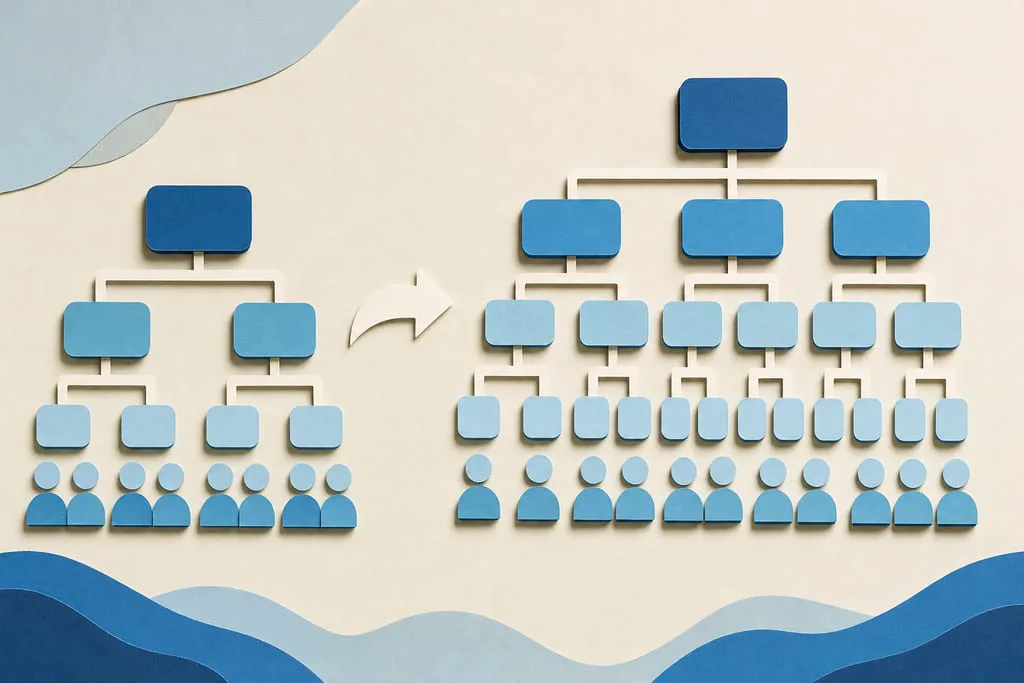
A strong answer to the firing question names the warning signs, the coaching steps you tried first, and the timeline before you made the call. A strong answer to the scaling question describes how portfolio size, segment, and quota change as headcount grows, not just that you "added more people."
- Name the performance metric that triggered the conversation, like missed renewal targets two quarters running
- Describe the coaching cadence you used before escalating, such as weekly 1:1s with written action items
- Explain how you split book size by segment, not headcount alone
- State the quota or portfolio size that triggers a new manager layer
Weak answers talk about "motivating the team" with no numbers attached. Panels remember candidates who say a manager should own no more than 6-8 direct reports and explain why, far more than candidates who speak in generalities about culture.
Renewal, Churn, and Revenue Questions
These questions test whether you can own a revenue number, not just a satisfaction score. The two you should expect are: walk me through how you forecast renewals for your book of business, and describe a time you reversed a churn trend across multiple accounts.
Candidates need fluency in net revenue retention, gross retention, and logo churn, and should expect a follow-up math question asking them to calculate NRR or GRR from a sample set of numbers on the spot.
- Name the renewal forecast categories you use, such as committed, at-risk, and upside
- State the NRR and GRR numbers from your last role, not industry averages
- Explain the root-cause process you ran when churn spiked, like a win-loss review across accounts
- Show the lead time you gave finance before a renewal slipped
Most B2B SaaS companies target NRR above 100% and GRR above 90%, and a director candidate who can't state where their last team landed on those two numbers will struggle here.
Strategy and Cross-Functional Questions
These questions check whether you can set direction without owning sales or product headcount. Expect: how would you segment our customer base and prioritize coverage, and tell me about a time you pushed back on product roadmap priorities.
Interviewers want data-backed prioritization, not a gut call about which accounts "feel" important. They also want proof you can influence a sales VP or a product lead who doesn't report to you.
- Segment accounts by revenue, usage depth, and expansion potential, not logo size alone
- Assign coverage ratios by segment, like 1:15 for enterprise versus 1:150 for tech-touch
- Bring a specific example where data changed a product leader's mind
- Show how you built a business case instead of asking for a favor
Candidates who cite a specific coverage ratio tied to account value stand out against those who describe segmentation in vague tiers. A resource on CSM interview questions covers how this same data-first habit gets tested earlier in a CS career, before someone reaches director level.
Executive Reporting and Board Questions
Director interviews always test how you communicate upward, because that's a daily part of the job once you're hired. The two questions to prepare for: how would you present a quarter of missed retention targets to the board, and what metrics would you put on a CS dashboard for the CEO.
Strong candidates translate CS data into revenue language a CFO or CEO already understands, instead of leaning on CS-only terms like health score or adoption curve.
- Lead with the revenue number, then the cause, then the fix
- Limit a CEO dashboard to 4-5 metrics, not a full CS reporting suite
- Pair every miss with a specific recovery plan and a date
- Practice a 60-second spoken version of the update before the interview, not just a written one
Boards and CEOs want a number and a plan, not a narrative, and candidates who rehearse the 60-second version out loud walk into the interview sounding like they've already done the job.
Picking Between a Polished Story and a Hard Number
A director panel has sat through dozens of candidates who say they are "proactive" and "customer-obsessed." Those words tell the panel nothing about what you actually did to a renewal number, so they get filtered out fast and the interviewer moves to the next question looking for a reason to pass.
The candidates who get offers tie every answer back to retention revenue, not sentiment. If the question is about a hard customer, the strong answer still lands on a dollar figure saved or a churn point reversed, because that's the only proof a CRO or finance partner trusts.
| Approach | What it sounds like | How panels react |
|---|---|---|
| Adjective-driven | "I'm very customer-obsessed and proactive" | Forgotten within minutes, no follow-up questions |
| Numbers-driven | "I moved GRR from 88% to 94% in two quarters" | Triggers a follow-up on method, moves you to next round |
| Mixed | Good story, no number attached | Seen as unfinished, panel asks "what did that mean for revenue" |
Salary ranges on director postings make this harder to fake. Listings on job boards show director-level pay running up to CAD 340k, and a number that high means the hiring company expects proof of impact at that scale, not a well-told anecdote.
So the real choice is between rehearsing a story and rehearsing a number. A story might get you through a first-round screen with an HR partner, but it will not survive a CRO asking what the churn trend looked like before and after your fix.
Write Three Stories Before You Walk Into The Room
Pick three moments from your career tonight and write them down: a hire or fire call you made, a churn recovery you led, and a board update you gave. Attach one metric to each before you walk in, not after the interview is over. The fire story needs the quarter count before you acted. The churn story needs the before-and-after percentage, like a GRR move from 88% to 94%. The board story needs the revenue number you led with, not the slide design. A panel asking director questions is testing whether you owned revenue or just managed relationships, and a story with a number attached is the only version that answers that. Once the three stories are written, check CSM Jobs for director postings in your target range and read what metrics those listings actually ask for.
Director Interview Worries You Still Have
Should I bring my own retention numbers if my company restricts sharing data externally?
Round your numbers and describe the trend instead of quoting exact internal figures. Say "GRR moved from roughly the high 80s to the mid 90s" rather than an exact figure pulled from a confidential dashboard. Panels care about the direction and size of the move, not a precise decimal, and most understand NDAs. If asked for exact numbers, say you can share the trend but not the raw figure, then move straight to what you did to cause it.
How do I answer a director question if I've only managed a small team of two or three people?
Talk about the depth of what you managed, not the headcount. A small team that hit its renewal targets, coached through a performance issue, or built a segmentation model still proves the same skills a panel is testing for. Frame your answer as "here's how I'd apply that process at 15 reps," using the coaching cadence and quota triggers from your experience as the base. Panels want proof of process, and process scales even when your current team doesn't.
What if they ask me to present a 30-60-90 day plan before I've seen their actual customer data?
Build the plan around questions you'd ask and data you'd pull in week one, not guesses about their book. Say the first 30 days are spent auditing segmentation, renewal pipeline, and team structure, and the 60-90 day plan depends on what that audit shows. A panel respects a candidate who says "I need real numbers before I commit to a fix" more than one who invents a plan on thin information.
Is it a red flag if a director interview never mentions team headcount or budget ownership?
Yes, ask about it directly before you accept an offer. A true director role owns people decisions and a budget line, and if nobody on the panel brings up headcount, reporting lines, or tooling spend, the title may carry less scope than the job postings you've been reading suggest. Director listings on CSM Jobs usually spell out team size and reporting structure in the description, so compare what you hear in the room against what similar roles post.